Onsen and Sento Etiquette: How to Bathe in Japan Without the Awkward Moment
Japanese public bathing — whether at a natural hot spring (onsen) or a neighborhood public bathhouse (sento) — runs on a set of unwritten rules that everyone local already knows and nobody explains to visitors. Get them wrong and you won’t get kicked out, but you will get some pointed stares. Here’s what’s actually expected, according to Japan’s own tourism authority.
The basic process
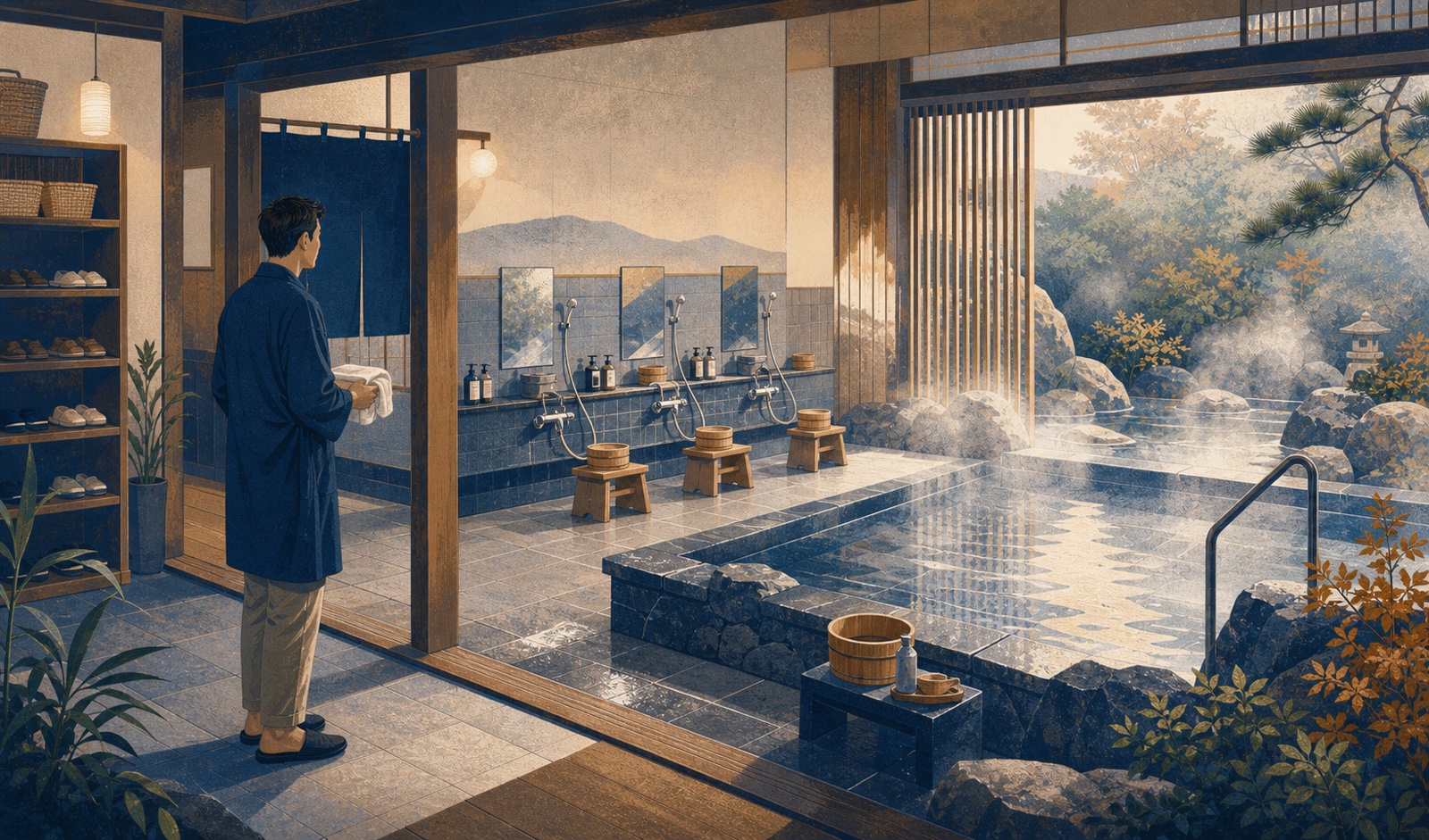
You bathe nude — swimwear isn’t worn in the communal bath, and clothing stays in the changing room. You’re allowed a small modesty towel to carry with you, but it doesn’t go in the water; fold it and set it on your head or beside the bath instead.
Before you get in, wash. There are washing stations in the bathing area with soap and shampoo provided — sit down, wash thoroughly, and rinse off completely (including any makeup) before you approach the bath itself. It’s also standard to pour some hot water over your body first (called kakeyu) to adjust to the temperature before you fully get in. The bath itself is for soaking and relaxing, not where you clean yourself — that already happened at the washing station.
A few more rules that matter: tie up long hair (or wrap it in a towel) so it doesn’t touch the water, keep your voice down in both the changing area and the bath, don’t swim or splash around, and leave your phone out of the bathing area entirely — photography is essentially never acceptable here, largely out of respect for other bathers’ privacy.
Tattoos: what’s actually going on
This is the question most visitors have, and the answer is more historical than legal. Tattoo restrictions at Japanese bathing facilities trace back to their association with organized crime groups, and facility operators who ban tattoos are generally doing it because they’re worried it’ll make other guests uncomfortable — not because there’s a law against it.
That said, the restriction is real and common enough that you should plan around it. Your practical options: look for facilities that specifically advertise themselves as tattoo-friendly (a growing but still limited category); ask staff directly if you’re unsure, rather than assuming either way; if your tattoo is small, cover it with a bandage or a tattoo-cover sticker, which is often enough to be let in; or book a private bath (sometimes called a family bath or kashikiri-buro), which you rent for your group only — tattoos are a non-issue there since nobody else is sharing the water.
Onsen vs. sento: what’s the actual difference
An onsen is a natural hot spring — the water is geothermally heated and drawn from underground, often with specific mineral content, and you’ll usually find them associated with a ryokan (traditional inn) or a dedicated bathhouse in a hot spring town. A sento is a regular neighborhood public bathhouse using ordinary heated tap water — historically built for people whose homes didn’t have their own bath, and still common in cities today as an inexpensive, everyday option. Both follow the same basic etiquette described above.
What a sento actually costs
Sento pricing in Japan isn’t set by individual businesses — it’s regulated by prefectural government, which sets a fixed maximum admission fee that every sento in that area has to follow. In Tokyo specifically, the current regulated rate (in effect since August 1, 2024) is ¥550 for adults (age 12 and up), ¥200 for elementary-school-age children, and ¥100 for children under 6. That’s changing soon, though: starting August 1, 2026, the Tokyo adult rate is set to rise by ¥50, to ¥600, while the child rates stay the same. If you’re reading this after that date, expect ¥600 as the adult price in Tokyo; other prefectures set their own regulated rates, which can differ.
Onsen, by contrast, aren’t price-regulated the same way — admission varies by facility, especially at hotels and ryokan where bathing may be bundled into your stay.
Conclusion
The etiquette isn’t complicated once you know it: wash first, no swimwear, towel stays out of the water, keep quiet, no photos. Tattoos are the one real wildcard — check ahead, cover small ones, or book a private bath if you’d rather not deal with it at all. And if you’re budgeting for a sento visit in Tokyo, remember the price is going up in August 2026, so double-check which side of that date you’re traveling on.
コメント