How to Use a Japanese Convenience Store Like a Local
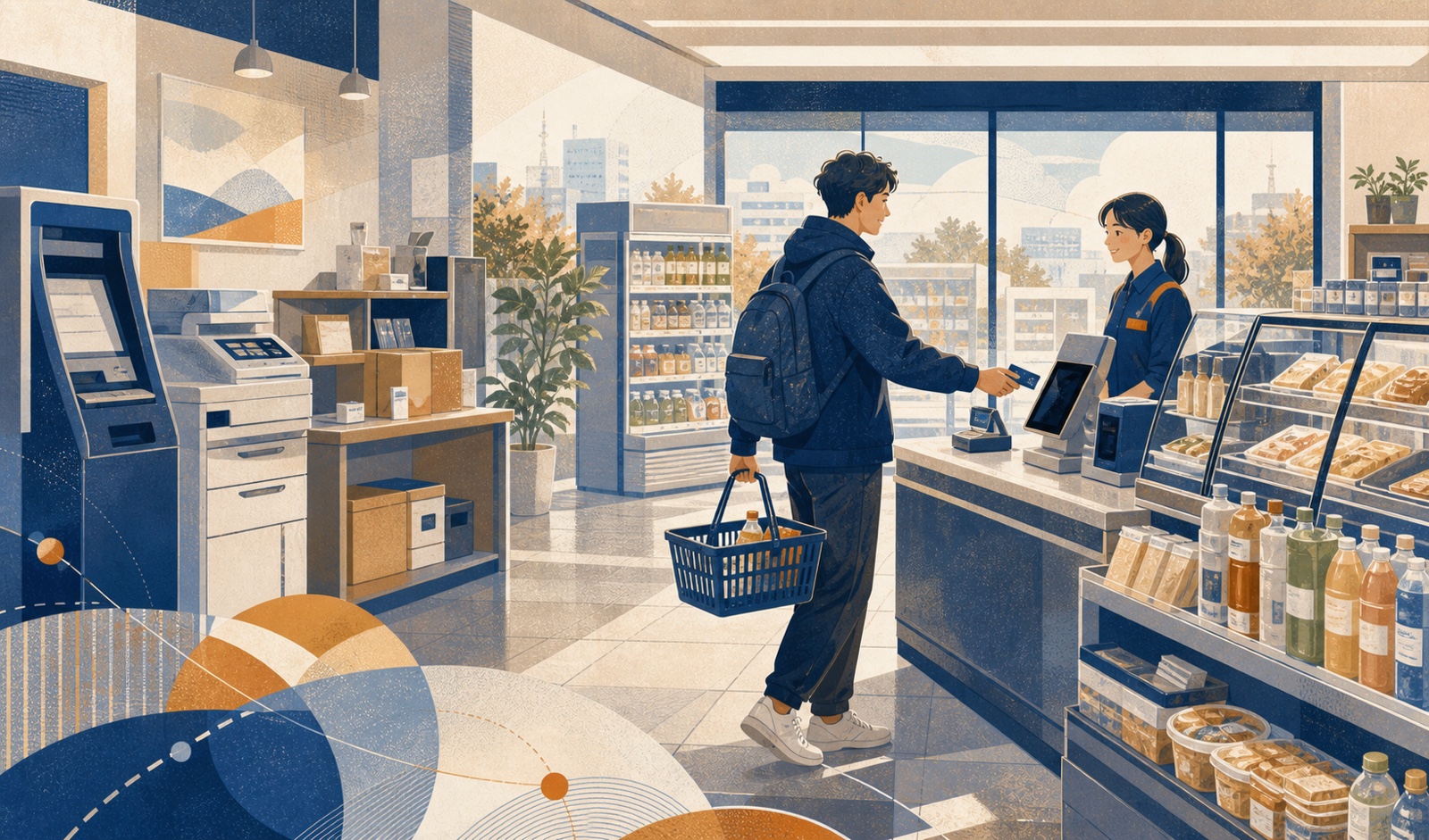
Convenience stores in Japan — konbini — do a lot more than sell snacks and coffee. For visitors, they end up functioning as a currency exchange, an ATM, a print shop, a ticket counter, and a shipping desk, often all within the same small storefront. Knowing what’s actually available can save you a trip to a bank or post office you didn’t need to make.
Paying: more options than you’d expect
Konbini accept a wide range of payment methods, which matters if you’re relying on cards or your phone rather than carrying cash everywhere. Based on 7-Eleven’s own published list, accepted payment methods include:
- Cash (Japanese yen only)
- Major international credit cards: Visa, Mastercard, JCB, American Express, Diners Club International, Discover, and UnionPay
- Contactless mobile payment: Apple Pay and Google Pay
- Transit IC cards: Kitaca, Suica, PASMO, Toica, manaca, ICOCA, SUGOCA, nimoca, and HAYAKAKEN — meaning if you already have a Suica or similar card loaded with money, you can just tap to pay for anything in the store
- QR code payment apps: WeChat Pay, Alipay and Alipay+ (which covers a range of regional wallets), PayPay, and J-Coin Pay
In other words, whatever combination of cash, card, or transit card you’re already carrying is very likely to work at the register without any extra setup.
ATMs that actually work with foreign cards
This is one of the most useful things about konbini for visitors: Seven Bank ATMs (found in 7-Eleven stores) let you withdraw Japanese yen using a foreign credit or debit card, with multi-language menu options. This matters because plenty of standard Japanese bank ATMs don’t accept overseas cards at all — the convenience store ATM is often the most reliable option, especially outside major cities. Keep in mind machines can occasionally be offline for maintenance, so it’s worth having a backup option if you’re relying on one at an odd hour.
Currency exchange machines
Some convenience stores also have a dedicated currency exchange machine that converts foreign banknotes into Japanese yen. The useful detail here: no ID or passport is required to use it, and the interface supports multiple languages. It’s a genuinely convenient fallback if you land with foreign cash and haven’t found a bank or airport exchange counter yet.
Tax-free shopping
Certain convenience store locations participate in Japan’s tax-free shopping program for visitors, letting eligible purchases be sold without consumption tax. Not every store offers this — check for signage or use the store locator tools most chains provide to find a participating location near you, and bring your passport, since tax-free purchases require it.
Printing, tickets, and other things the copy machine can do
The multi-function copy machines you’ll see near the entrance of most stores aren’t just for printing documents. They’re commonly used to buy or print tickets for concerts, museums, and other events, and many support printing directly from a smartphone. If you need to print a boarding pass, a reservation confirmation, or a document for a visa or immigration process, this is usually the easiest place to do it without hunting for a print shop.
Shipping and package drop-off
Many convenience stores also accept parcels for domestic courier delivery — a genuinely useful option if you’ve bought more than you can carry and want to send it ahead to your hotel, or ship souvenirs home before you fly out. The process and pricing depend on the courier service and package size, so if this is relevant to your trip (especially for “hands-free travel,” sending luggage between cities or to the airport), it’s worth reading a dedicated guide before you go — the short version here is: yes, it’s usually possible, but check the details for your specific route.
A few other things worth knowing
Plastic bags aren’t automatically included with a purchase — Japan introduced a bag charge that varies by size, so just ask staff if you want one. Utility bills, and other routine payments are also commonly handled at the register in Japan, though this matters far more to residents than to short-term visitors.
Conclusion
Treat the nearest konbini as more than a snack stop: it’s frequently your most reliable ATM, a no-ID currency exchange, a place to print things, and — depending on the chain and location — a tax-free shop and a parcel counter. When in doubt about whether a specific service is available at a given store, the staff can usually point you in the right direction even with a language barrier, since these interactions are routine for them.


コメント